
Meng, Y., Zhang, J., Hong, Z., & Drinkwater, B. W. (2025). Numerical and experimental study of circular array to enhance acoustic tweezer-based particle manipulation. Ultrasonics, 152(March), 107647.
https://doi.org/10.1016/j.ultras.2025.107647
Abstract
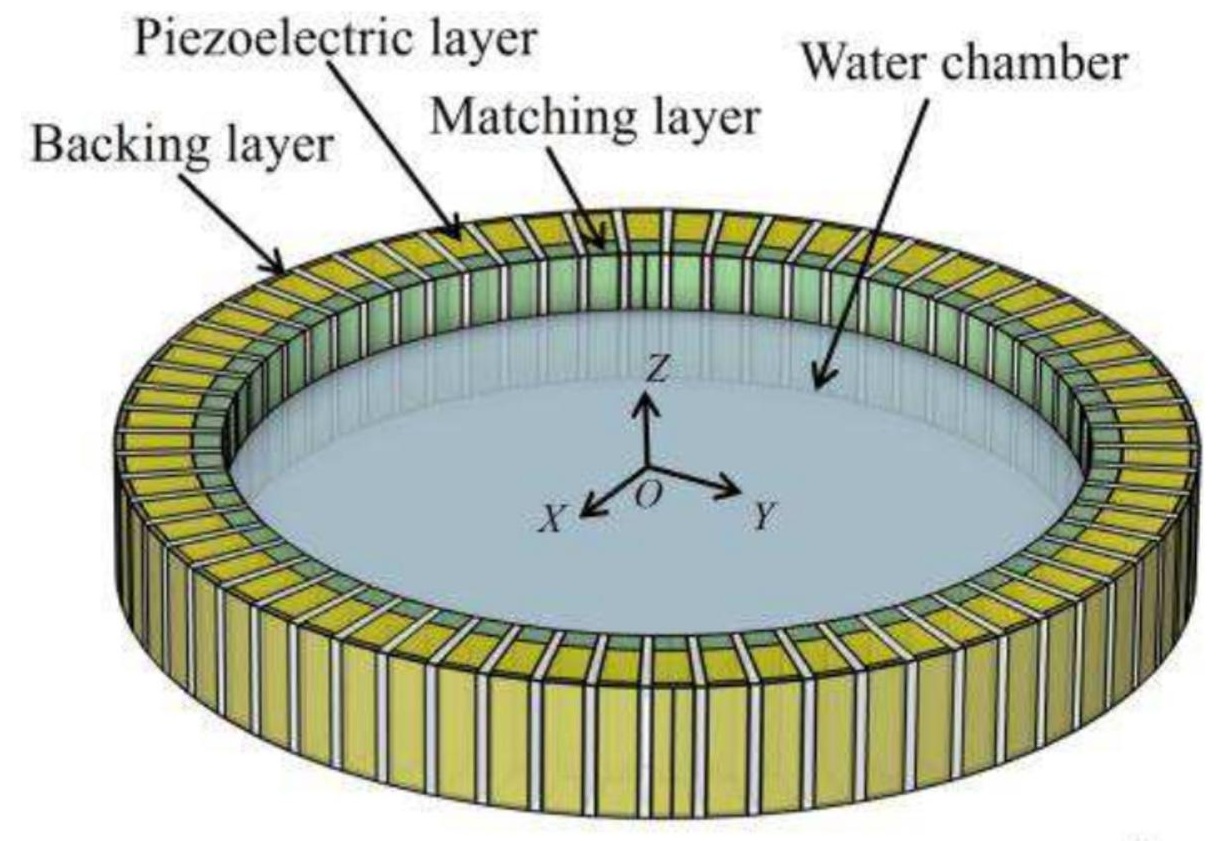
coustic tweezers enable non-contact, non-invasive manipulation, with promising applications in fields such as biology, micromechanics, and advanced materials. The circular array, commonly used to generate acoustic vortices, an important type of acoustic tweezer, consists of multiple independently addressable elements arranged in a circular configuration. By adjusting the element excitation, the circular array can flexibly control the location of particles. In this study, we employed numerical and experimental methods to analyse the relationship between device geometrical parameters and acoustic field distribution, as well as their impact on particle manipulation. Results from the three-dimensional model indicate that water surface height, array radius, and the material and thickness of the bottom observation layer, significantly influence the acoustic field distribution and, hence trapping performance. Additionally, we used trap stiffness theory to evaluate particle movement capability, and experimentally identified conditions under which trapping may fail, providing theoretical support for improving acoustic tweezer technology.

 Bruce Drinkwater